
The Nonprofit Crisis Is Not New for Black-Led Organizations
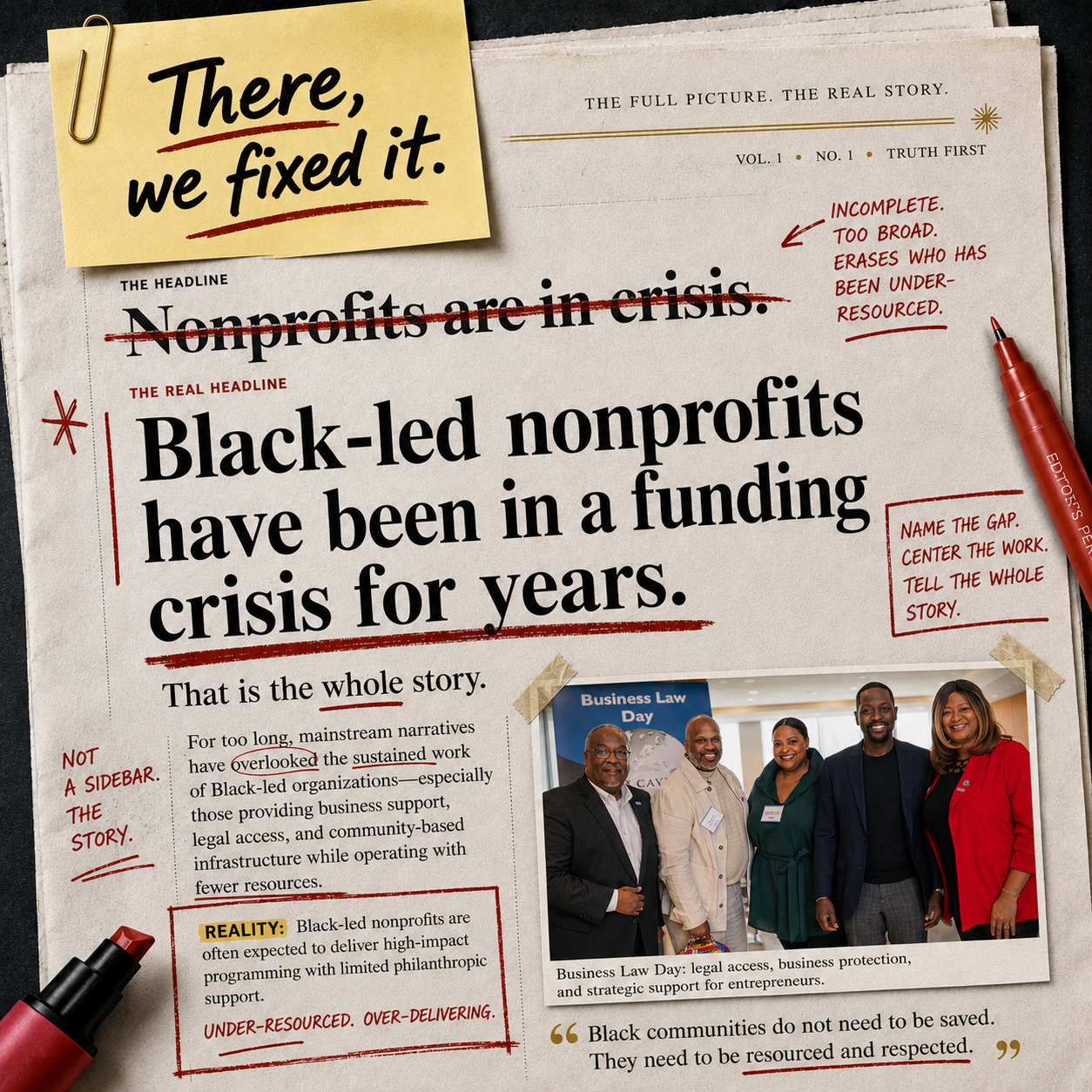
A recent Axios headline stated: “Nonprofits say they are in a crisis.”
The headline may be true.
But when the crisis is framed as new, it becomes dismissive and devaluing to Black-led nonprofits that have been operating in crisis for years.
Funding gaps. Increased demand. Limited reserves. Donor competition. Unsustainable expectations.
For many Black-led organizations, those conditions did not suddenly arrive. They have long been the operating environment.
This is the reality of philanthropic redlining.
Black-led nonprofits are often expected to serve communities facing disproportionate economic harm while receiving disproportionately limited philanthropic support. They are expected to deliver high-impact programming, fill institutional gaps, and create community-based infrastructure with fewer resources, less margin, and less protection.
And when Black-led organizations struggle under those conditions, the conversation often turns to capacity, readiness, sustainability, or whether the organization is “scalable.”
When the broader sector experiences the same pressure, the conversation shifts to systems, funding structures, public responsibility, and sector-wide crisis.
That distinction matters.
At Black Connect, we have seen this up close through programs like Small Business Legal Services, business mentoring initiatives, and FeverPitch.
These programs do more than inspire entrepreneurs. They help entrepreneurs access legal support, strengthen business decisions, build relationships, gain visibility, and secure early support at stages when access can determine whether a business survives.
That survival gap is real. According to the Alliance for Entrepreneurial Equity, 80% of Black-owned businesses fail within the first 18 months. Crunchbase reported that startups with a Black founder or co-founder received just 0.4% of all startup funding in 2024.
So when Black-led nonprofits create programs that provide legal access, mentoring, business development, and early-stage funding, they are addressing a survival issue — not simply offering encouragement.
The work is real.
The need is real.
The funding gap is real.
So yes, nonprofits are in crisis.
But the fuller story is this:
Black-led nonprofits have been in a funding crisis for years — and they deserve to be resourced accordingly.