
The Calm Before The Storm
The Calm Before the Storm
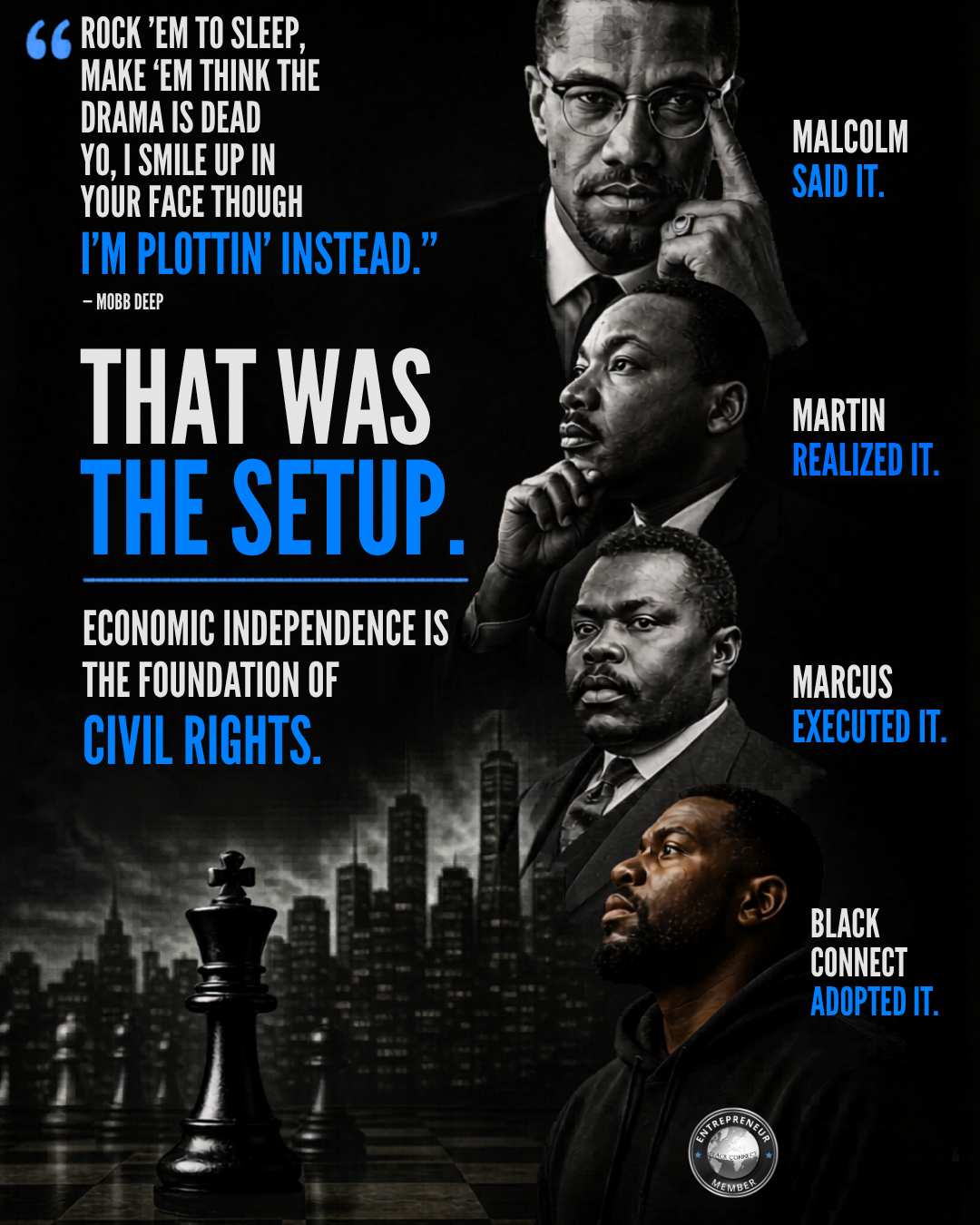
“Rock 'em to sleep,
Make 'em think the drama is dead
Yo, I smile up in your face,
Though I'm plottin' instead.”
It’s not just a lyric from a Mobb Deep song.
It’s psychological manipulation. A strategy.
Keep things quiet.
Make the issue look settled.
Let people believe the fight is over.
The Illusion of Progress:
We got comfortable.
Civil rights protections created the appearance of stability.
Not equality—stability.
There was a belief that the system was correcting itself.
That whatever gaps remained would close over time.
That the law was moving things forward.
That belief lowered our guard.
What Was Actually Happening:
The structure didn’t change.
Access to opportunity remained gated.
The wealth gap widened.
Inclusion was performative.
Perception changed. The system did not.
What This Decision Shows:
The recent Supreme Court decision in Louisiana v. Callais makes that clear.
Civil rights protections are now narrower.
If inequality can be explained without explicitly naming race, it is harder to challenge.
That’s the shift.
Not in outcomes—
in accountability.
Let’s Not Misread the Moment:
This is a setback. But it was foreseeable.
The belief that legal protection equals progress is refuted by the racial wealth gap, over-policing, wage disparity, philanthropic redlining.
Rights on paper don’t control outcomes.
Power does.
Political participation is not political power.
Political influence is not control.
Three justices dissented in Louisiana v. Callais.
Their voices did not control the outcome.
What That Means:
If our position depends on legal protection, it can change.
If our position depends on access granted by the system, it can be limited.
If our position is not backed by ownership, it is not secure.
The Calm After the Storm:
We know what to do.
Malcolm said it.
Martin realized it.
Marcus executed it.
Economic independence is the foundation of civil rights.
Because economic power sustains political power.
Without it, political gains are temporary.
Without it, representation does not translate into control.
Without it, communities remain subject to decisions designed to maintain the system - not change it.
Without economic power, political power doesn’t hold.